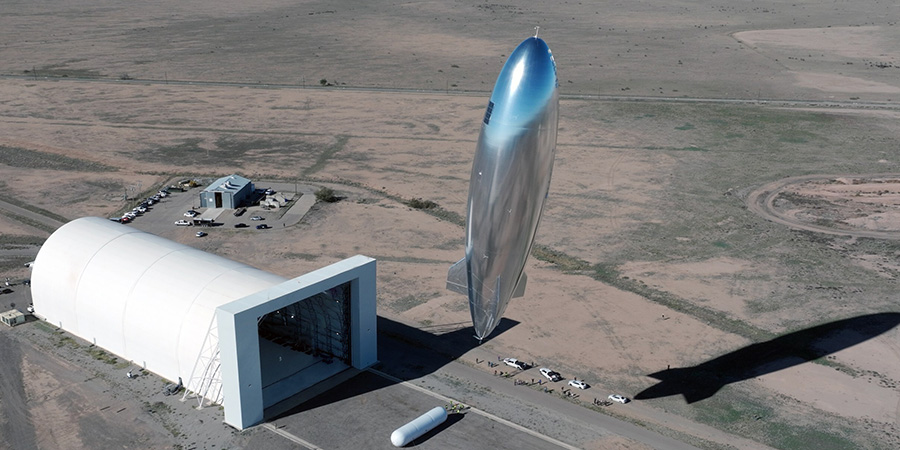
Sceye HAPS Specs For Payload, Endurance And Battery Breakthroughs
1. Specifications will tell you what the Platform Will Actually Do
There's a tendency in the HAPS sector to focus on goals rather than engineering. Press releases cover coverage areas such as partnership agreements, coverage areas, and commercial timelines. But the more challenging and more insightful discussion is about specifications – what the vehicle actually has to carry and how long it remains on the road, as well as what energy systems make continuous operation possible. Anyone trying to determine whether a space-based platform is truly mission-capable, or even in the promising-prototype phase, capacities for payloads, endurance estimates and battery power are the areas where the real substance is. Inconsistent promises to "long endurance" and "significant payload" are easy. Delivering both simultaneously at high altitude is the engineering issue which differentiates credible announcements from bold announcements.
2. Lighter-Than-Air Architecture Changes the Payload Equation
The fundamental reason Sceye's airship design is capable of carrying a substantial payload is because buoyancy performs the principal task to keep the vehicle afloat. This is not an insignificant distinction. Fixed-wing solar aircrafts must produce aerodynamic lift throughout the day. This consumes energy and has structural constraints which restrict the amount of mass the vehicle can sensibly carry. Airships floating at equilibrium in the stratosphere does not expend energy fighting gravity the same way as fixed-wing aircraft do — therefore the energy produced through its solar array and the structural capability of the vehicle, is able to be utilized for stations keeping, propulsion and payload operation. It's the result of an ability to payload that fixed-wing HAPS designs that have similar endurance actually struggle to match.
3. Capacity for Payloads Determines Mission Versatility
The actual significance of higher payload capacities is evident when you consider what stratospheric tasks actually need. The payload of telecommunications – antenna systems including signal processing hardware beamforming equipment — carries significant weight and volume. So does a greenhouse gas monitoring suite. So does a wildfire detection or Earth observation package. Running any one of these missions efficiently requires a large amount of hardware. In order to run multiple missions simultaneously, you need more. Sceye's airship specifications have been designed around the principle of a stratospheric platform to be capable of carrying a efficient combination of payloads, rather than making operators choose between observation and connectivity since the vehicle doesn't have enough space to accommodate both at the same time.
4. Endurance is where Stratospheric missions can win or lose
A platform that reaches stratospheric altitude for at least 48 hours before having to go down is great for demonstrating. A platform that can remain in place for weeks or even months at during the course of building commercial services. The difference between the two outcomes is an energy matter — specifically, whether or not the vehicle can generate enough solar energy during daylight hours to run all its systems and charge its batteries enough to provide functioning throughout the night. Sceye endurance goals are based on the diurnal cycle issue and treat the requirement for energy supply during the night not as a stretch objective but as a core principle that everything else needs to be crafted around.
5. The Lithium Sulfur Battery is a Real Step in the Right Direction
The battery technology that powers conventional electronic devices and electric vehicles — predominantly lithium-ion. It has energy density properties that cause real difficulties for stratospheric endurance. Every kilogram of mass that you carry will not be available to be used for payloads, but there is a need for enough stored energy in order to keep the large platform operating in a stratospheric night. The chemistry of lithium-sulfur batteries alters this equation considerably. With energy density values that reach 425 Wh/kg, batteries made of lithium will store significantly more power per pound than similar lithium-ion battery. If you're driving a car with a limited weight, and every one gram of battery weight has an opportunity cost in payload capacity, this improvement in energy density doesn't just happen small, it's significant.
6. Improved Solar Cell Efficiency Are the Other Half of the Energy Story
Battery energy density determines the amount of power it can store. Solar cell efficiency determines how quickly you can replenish it. Both of them are crucial, and advancement of one without advancement in the other causes a distorting energy structure. Enhancements in high-efficiency photovoltaics — which include multi-junction versions that capture a broader spectrum of solar energy compared to conventional silicon cells – have dramatically improved the amount of energy available to solar-powered HAPS vehicles during daylight hours. Combined with lithium-sulfur storage, these developments make an actual closed power loop feasible: creating and storing sufficient energy each day to operate all systems indefinitely without external energy input.
7. Station-Keeping Draws Constantly From the Energy Budget
It's common to think of endurance only in terms getting up, but in the stratospheric sphere, remaining floating is only a tiny part of the equation for energy. station keeping — holding position against the winds of the stratosphere by propulsion that is continuous generates power constantly and is an important portion of the total energy consumption. The energy budget needs to include station keeping as well as payload operations, avionics, communications, and thermal management systems all at once. This is why specs that provide endurance figures without describing the specific systems operating during that endurance are difficult to judge. Realistic endurance numbers assume complete operating load, not a unconfigured vehicle coasting payingloads disabled.
8. The Diurnal Cycle Is the Design Constraint All Other Things Is Flowing From
Stratospheric engineers talk about the diurnal phase — the rhythmic daily cycle that determines the amount of solar energy available — as the central limitation on which the platform is designed. During daylight the solar array has to produce enough power to power all systems and charge batteries to their capacity. At night, these batteries have to power all systems until sunrise, without becoming unstable, degrading their performance or entering any kind of reduced capacity mode that would disrupt a continuous monitoring or connectivity mission. In the design of a vehicle to thread this needle without fail daily, for months at a stretch, is the core engineering challenge of solar-powered HAPS development. Every specification decision (solar array area the chemistry of batteries, propulsion efficiency, power draw to the payload — feeds into this single main constraint.
9. It is the New Mexico Development Environment Suits This Kind of Engineering
In the process of developing and testing a stratospheric airship requires airspace, infrastructure and conditions in the atmosphere that aren't available everywhere. Our base at New Mexico provides high-altitude launch and recovery capabilities, clear weather conditions to test solar power and access to the kind of continuous, uninterrupted airspace that continuous flight testing requires. As a company in the aerospace industry of New Mexico, Sceye occupies an undisputed position focused on stratospheric lighter-than-air techniques rather than Rocket launch programs more commonly located in this region. A rigorous engineering approach to verify endurance claims and the performance of batteries under real-world stratospheric conditions is precisely the kind of work that can be benefited from a dedicated test environment in contrast to the more impulsive flight programs that exist elsewhere.
10. Specifications that withstand Examination Are What Commercial Partners need.
The main reason specifications matter more than technical considerations is that partners from the commercial sector making investment decisions should be aware they are relying on the facts. SoftBank's commitment to a national HAPS network within Japan and the target of pre-commercial services by 2026, is based upon the certainty that Sceye's platform will perform as described under operating conditions not only in controlled tests, but sustained over the period of time a commercial network requires. Capacity for payloads that are able to withstand using a complete telecommunications or observation suite aboard endurance measurements that are validated through actual stratospheric operations, and battery performance proven over real daytime cycles are what can transform a promising aerospace program into a network infrastructure that a major telecoms operator is prepared to stake its plans for network expansion on. Read the recommended sceye careers for site recommendations including Mikkel Vestergaard, Sceye stratosphere, what are high-altitude platform stations haps definition, HAPS technology leader, what is a haps, space- high altitude balloon stratospheric balloon haps, sceye haps project status, sceye greenhouse gas monitoring, sceye haps softbank partnership details, stratospheric internet rollout begins offering coverage to remote regions and more.
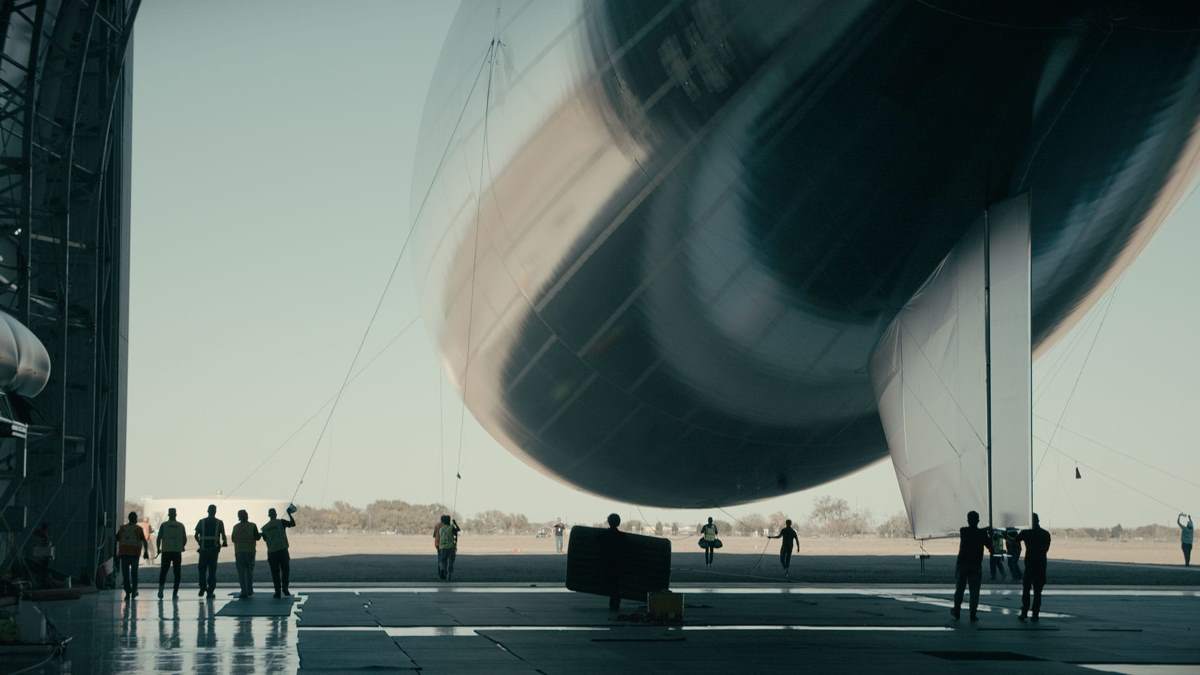
Mikkel Vestergaard's Vision Behind Sceye's Aerospace Mission
1. It's a largely under-rated Aspect In Aerospace Company Outcomes
The aerospace industry is one of two broad types of company. The first is built around a technology that is looking for applications — a technical capability in search of a marketplace. The second is based on a problem that matters and works in reverse to the technologies needed for addressing the issue. This may sound like a logical distinction when you examine what kind of firm actually produces on, the partnerships it chooses to pursue and the way it trade-offs when resources become scarce. Sceye fits into the second category. being aware of this is vital to comprehending why the company has made the particular engineering decisions it has based on -for example, lighter-than-air designs, multi-mission payloads, a focus on endurance, and a foundational basis on the state of New Mexico rather than the areas of aerospace clusters along the coast that attract the majority of space-related venture capitalists.
2. The Issue Vestergaard started with was much bigger than Connectivity
The majority of HAPS companies find their main narrative in telecommunications — an insufficient connectivity, the lost billions, the business of reaching people in remote areas without access to infrastructure on the ground. These are all real and significant issues, but they're commercial problems that require solutions. Mikkel Vestergaard's starting point was different. His experiences in applying advanced technology to humanitarian and environmental problems led to an initial approach at Sceye that views connectivity as an output of the stratospheric infrastructure rather than as its primary function. Greenhouse gas monitoring in addition to disaster detection, Earth observation as well as oil pollution surveillance and management of natural resources were part of the mission's architectural framework from the beginning, not additional features later added to make a telecoms system appear more socially aware.
3. The Multi-Mission Platform is the Direct Manifestation of That Vision
When you recognize that the starting point was to determine how the an infrastructure for the stratosphere could solve the major concerns with connectivity and monitoring and simultaneously, the multi-payload design is no longer a smart commercial approach and starts to appear as the most sensible answer to that question. A platform that carries technology for telecommunications, along with real-time methane monitoring sensors and technology for detecting wildfires isn't trying make itself available to everyone It's expressing an understanding that problems worth solving from the stratosphere are interconnected and that a vehicle capable of solving a variety of them at once is more compatible with the objective than one designed for one revenue stream.
4. New Mexico Was a Deliberate One, Not an Accidental One
Sceye's location in New Mexico reflects practical engineering requirements, such as access to airspace as well as conditions for atmospheric testing, high altitude capabilities, but also conveys something about the identity of the company. The well-established aerospace hubs in California and Texas draw companies whose main customer base is investors, defense contractors, and the media industry that surrounds their interests. New Mexico offers something different: the physical environment needed for the actual task of the development and testing of stratospheric lightweight-than-air devices without the performance pressure of being in close proximity to those that write and invest in aerospace. In the aerospace industry in New Mexico, Sceye has created a research and development program centered around the validation of engineering rather than the public narrative — a choice that indicates a founder who is more concerned about whether the platform actually functions instead of if it can generate impressive announcement cycles.
5. Endurance as a Design Priority is a reflection of a long-term mission orientation
Short-endurance HAPS platforms are fascinating demonstrations. Long-endurance systems are infrastructure. The focus in Sceye duration — creating vehicles that will be able to maintain station over months or for weeks rather than days — is a reflection of the founder's belief of the fact that problems worth tackling from the stratosphere don't resolve in between flights. Monitoring of greenhouse gases that runs for a few weeks and then goes dark produces a data recording with no scientific or regulatory value. In the event of a disaster, the use of a platform that is repositioned and launched after every deployment cannot be the permanent early warning system that emergency managers require. The endurance specifications are a declaration of what the purpose of the mission is, not a performance metric which is used solely for its own benefit.
6. The Humanitarian Lens Shapes Which Partnerships Be Prioritised
Some partnerships may not be worth exploring in the first place, and the criteria that a company uses to evaluate potential partners can tell you something regarding its aims. Sceye's partnership with SoftBank on Japan's nationwide HAPS network — which is aimed at pre-commercial services in 2026 -is noteworthy not only for its commercial scale, but for its alignment with the country that truly needs its stratospheric infrastructure. Japan's seismic sensitivity, complicated geography, and national dedication to monitoring environmental conditions makes it a location in which the platform's multi-mission capabilities are serving more than making money in a marketplace that already has sufficient alternatives. That alignment between commercial partnership and mission objectives isn't by chance.
7. It is important to make investments into Future Technologies Requires Conviction About the Challenge
Sceye operates in a development environment that the technologies it is relying on — lithium-sulfur batteries at 425 Wh/kg density for energy, high-efficiency solar cells designed for stratospheric aircraft, and advanced beamforming to make stratospheric radio antennas — are within the realm of what's currently possible. In order to create a plan for business around technologies that are improving but not yet mature requires a founder with a sufficient understanding regarding the necessity of the issue that they justify the risk of a timeline. Vestergaard's belief in the fact that stratospheric infrastructure will evolve into a continuous layer of global connectivity and monitoring is the main reason for investment in future technologies which will not be able to fully exploit their capabilities until the platform they create is already flying commercially.
8. The Environmental Monitoring Mission Has Become More Important Since Its Inception
One of the benefits that comes with forming a business around an actual issue rather than a trend in technology, is that the problem tends to become more rather or less significant with time. When Sceye was launched, the need for constant monitors of greenhouse gas emissions in the stratospheric region Wildfire detection, the monitoring of disasters in the climate was convincing in the sense of. In the intervening years an increase in wildfire season, increasing methane emission scrutiny under international climate frameworks, as well as the actual inadequacy of our existing monitoring infrastructure have all bolstered that argument to a large extent. The vision that was established in the beginning hasn't needed for revision in order to stay in the current climate, but the world has moved towards it.
9. The Careers at Sceye show how the Breadth of the Mission
The number of disciplines needed to create and operate stratospheric platforms that can be used for multiple missions is much greater than the majority of aerospace applications require. Sceye careers encompass sciences of the atmosphere, materials engineering the power system, telecommunications programming for remote sensors, as well as regulatory matters — the cross-disciplinary nature of Sceye's profile reflects an array of capabilities that the platform is designed to accomplish. Companies that are founded on a single-use technology are more likely to recruit within the specific discipline of the technology. Businesses based around a challenge which requires multiple converging technologies to help fill the boundaries of these disciplines. The talent profile that Sceye attracts and develops is an expression of the vision of its founders.
10. The Vision is Successful Because it's Specific about the Issue The Vision is not about the solution.
The most robust founding visions in tech companies are clear regarding the issue they're trying to solve and flexible about the methods used. Vestergaard's framing — pervasive stratospheric technology for monitoring connection, and monitoring of environmental conditions — is specific enough to provide clear engineering requirements and clear partner criteria and yet is flexible enough so that it can adapt to the changing requirements of new technologies to enable. When battery chemistry is improved, as solar cell efficiency improves, as HIBS standards develop, and as the regulatory framework for stratospheric operations develops, Sceye's mission is not changing, but its means of executing that mission can incorporate the top technology available at each stage. This structure- fixed upon the issue, but adaptive to the solution is the reason why the aerospace mission has continuity across a development time line determined in years rather than production cycles. Check out the best softbank sceye partnership haps for site recommendations including Stratospheric infrastructure, Station keeping, what are high-altitude platform stations haps definition, sceye haps payload capacity, softbank haps pre-commercial services 2026 japan, Monitor Oil Pollution, what are haps, sceye greenhouse gas monitoring, Stratosphere vs Satellite, Sceye News and more.